
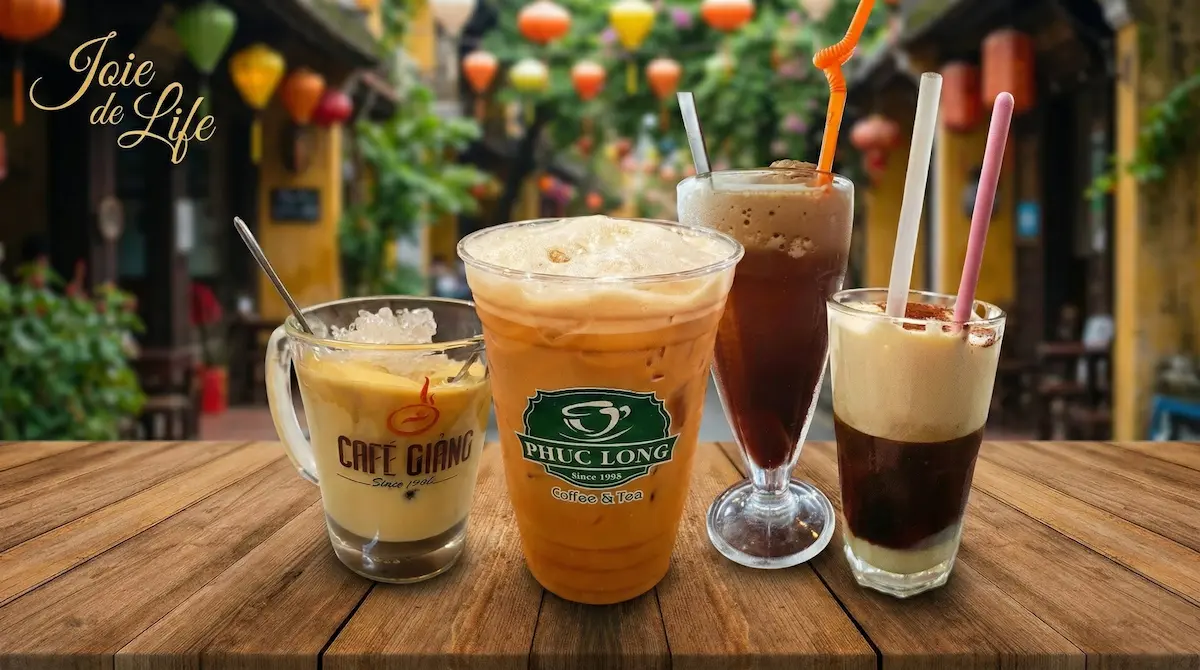
Good Morning, Vietnam: A Caffeinated Love Story (and Where to Find the Best Brews)
If you think you know coffee, Vietnam will politely ask you to sit down—preferably on a tiny blue plastic stool—and reconsider.
During my recent trip to Hanoi with my family (Bits, Saumu, and Ayu), I realized quickly that coffee here isn’t just a morning wake-up call. It is a ritual. It is a dessert. Sometimes, it’s even a meal. The air in the Old Quarter smells perpetually of roasted Robusta beans and sweet condensed milk, a scent that now triggers a wave of nostalgia every time I brew a cup back home.
Since we are all about Live, Explore, Taste, and Toast, let’s dive deep into the world of Vietnamese coffee. Whether you are planning a trip or just dreaming of one, here is your high-value guide to the liquid gold of Vietnam.
The “Holy Trinity” (Plus Two Wildcards)
Vietnamese coffee is famous for being strong. They use Robusta beans, which have nearly double the caffeine of the Arabica beans we are used to in the West. To balance that punchy bitterness, they have invented some truly magical concoctions.
1. The Legend: Egg Coffee (Cà Phê Trứng)

Hot or Iced? definitely Hot. It is served in a bowl of warm water to keep the egg froth fluffy and warm. It’s rich, custard-like, and absolutely decadent. Though, my personal choice is always an iced one.
The Taste: Imagine a liquid Tiramisu.
The Story: Invented in the 1940s by Mr. Nguyen Giang during a milk shortage, this drink whips egg yolks and condensed milk into a thick, airy meringue that floats on top of dark espresso.
2. The Crowd-Pleaser: Coconut Coffee (Cà Phê Cốt Dừa)
The Taste: A tropical coffee slushie.
The Vibe: This was a hit with the family. It’s essentially a frozen blend of coconut milk, condensed milk, and ice, topped with a shot of black coffee.
Hot or Iced? Iced. It is the ultimate cooldown drink after walking around a humid city.

3. The Daily Fuel: Condensed Milk Coffee (Cà Phê Sữa Đá)

The Taste: A rocket fuel punch of strong coffee + sweet, syrupy milk.
The Method: Watched slowly dripping through a metal filter (phin) into a glass containing a layer of condensed milk.
Hot or Iced? Iced (Đá) is the classic way, especially in the heat of Saigon. If you want it hot, ask for Cà Phê Sữa Nóng.
4. The Wildcard: Salt Coffee (Cà Phê Muối)
The Taste: Think “Salted Caramel” but better. The salty cream foam enhances the sweetness of the milk and cuts the bitterness of the coffee.
Origin: This started in Hue but is now trending everywhere.

5. The Breakfast Hybrid: Yogurt Coffee (Sữa Chua Cà Phê)

The Taste: Tangy, creamy, and weirdly addictive. It’s yogurt topped with a drizzle of black coffee. It sounds wrong, but it tastes so right.
The Coffee Map: Famous Joints You Cannot Miss
While our family trip focused on the charm of Hanoi, I’ve compiled a “Bucket List” of legendary spots across the country for your itinerary.
📍 HANOI: The Cradle of Coffee Culture
This is where we spent our days, and the cafe scene here is unmatched.
- Cafe Giang: The original birthplace of Egg Coffee. It’s humble, crowded with low tables, and absolutely essential.
- Note Coffee: A stone’s throw from Hoan Kiem Lake. The walls are covered in thousands of sticky notes from travelers. The kids (Saumu and Ayu) loved reading the messages while sipping coconut lattes.
- Cafe Dinh: Run by Mr. Giang’s daughter. It’s harder to find (you have to go through a bag shop and up some dark stairs), but it offers a more local vibe and a balcony view of the lake.
- Train Street Cafes: While access can be tricky due to regulations, sipping a cold brew while sitting inches from the railway track is a quintessential Hanoi memory.
📍 DA NANG: The Modern Chill
- Cong Caphe: Yes, it’s a chain, but their Coconut Coffee is consistent and arguably the best. The military-chic decor is also very cool.
- Nam House: For a retro, vintage vibe that feels like stepping into a Vietnamese living room from the 80s.
- Long Coffee: An institution in Da Nang. It’s less about aesthetics and more about sitting on a stool, watching the street, and drinking strong coffee with the locals.
📍 HOI AN: The Aesthetic Dream
- Hoi An Roastery: You will see these everywhere in the Old Town. Great for people-watching.
- Coconut Coffee Hoi An: As the name suggests, this is the spot for coconut lovers. It’s often served in an actual coconut shell!.
- Reaching Out Teahouse: While famous for tea, their silent service (run by hearing-impaired staff) makes for a beautiful, tranquil coffee break in the middle of the bustling town.
📍 SAIGON (Ho Chi Minh City): The High-Octane Hub
- Cheo Leo Cafe: The oldest cafe in the city. They still brew coffee in clay pots over a wood fire. It’s smoky, historic, and utterly unique.
- Ca Phe Do Phu: A coffee shop that doubles as a museum—it has a secret bunker used during the war!.
- Cafe Ba Lu: Located in the Cho Lon (Chinatown) area, they roast their beans with butter and corn wine for a unique flavor profile.

A Note on Ordering
If you (or your travel partners) find the traditional coffee too strong, ask for a “Bac Xiu.” It is essentially coffee-flavored milk—lots of condensed milk, lots of ice, and just a splash of coffee. It was a lifesaver for us when we wanted the flavor without the heart palpitations!
Final Toast
Vietnam doesn’t just serve coffee; it serves a lifestyle. It forces you to slow down, sit on a small stool, and watch the world drift by.
So, here is my advice: When you go, don’t just grab a coffee to go. Sit down. Order the Egg Coffee. Stir it slowly. And taste the history in every sip.
What’s your coffee order? Sweet and creamy or dark and dangerous? Let me know in the comments!


Leave a Reply