
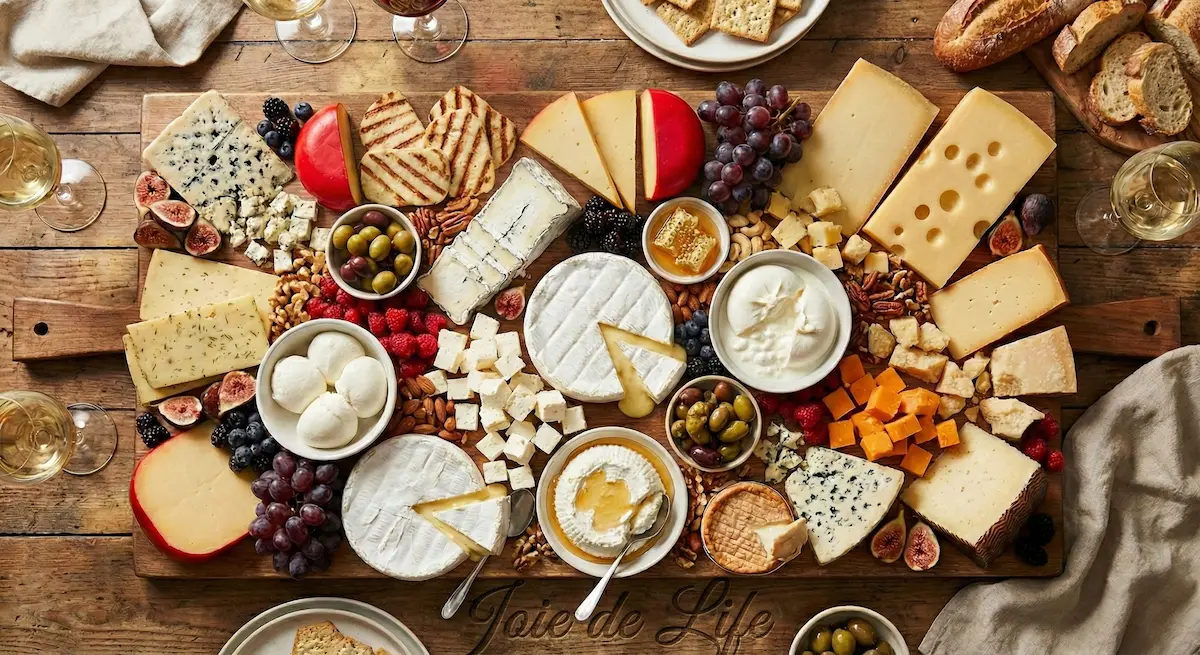
Is there any culinary centerpiece quite as inviting as a perfectly curated cheese board? It’s the anchor of a great party, the start of a wonderful meal, and sometimes, a decadent dinner all on its own.
But let’s be honest: stepping up to a gourmet cheese counter can be intimidating. With hundreds of varieties, distinct rinds, and confusing names, it’s easy to panic and grab the same block of standard cheddar you always buy.
At Joie de Life, we believe exploring food should be a joy, not a chore. To help you navigate the wonderful world of fromage with confidence, I’ve compiled a comprehensive guide to cheese varieties.
Whether you are looking for something gooey to spread on a baguette, something salty to grate over pasta, or something unique that doesn’t melt on the grill, you’ll find it here.
Here is your ultimate guide to cheese, categorized by texture and style.
1. Soft & Bloomy Rind (The “Runny” Spreadables)
These are the stars of the show—luxurious, buttery, and best served at room temperature so the interiors get delightfully gooey. They are characterized by their edible, fuzzy white rinds.
- Brie: The most famous soft cheese. Rich, buttery, mild, and creamy with gentle hints of mushroom.
- Camembert: Similar to Brie but traditionally made in smaller wheels, giving it a stronger, earthier, and slightly more intense flavor profile.
- Humboldt Fog: A stunning American goat cheese with a distinctive ribbon of edible vegetable ash running through the center.
2. Fresh & Milky (Soft & High Moisture)
These cheeses are young, haven’t been aged, and have a high water content. They taste clean, bright, and milky.
- Fresh Mozzarella: Soft, white, elastic balls usually stored in brine or whey. Essential for a Caprese salad.
- Burrata: The ultimate luxury. A shell of solid mozzarella filled with cream and soft curds. When you cut it, the cream spills out beautifully.
- Ricotta: Soft, slightly grainy, and sweet. It’s scoopable and spreadable, perfect for lasagna or simply on toast with a drizzle of honey.
- Mascarpone: A thick, rich Italian triple-cream cheese (think very high-end cream cheese). Smooth and buttery, most famous for making Tiramisu.
- Chèvre (Fresh Goat Cheese): Tangy, bright, and crumbly without a rind. It often comes in a log and pairs wonderfully with fruit.
- Feta: Tangy, salty, and crumbly. Because it is brined, it adds a distinct sharp kick to salads.
3. The “Non-Melters” (Cooking & Grilling)
Unlike most cheese that turns into a puddle when heated, these have a unique structure that allows them to hold their shape, making them perfect for frying or grilling.
- Paneer: A fresh, acid-set Indian cheese. It is mild, milky, and spongy, perfect for absorbing rich curry sauces or being cubed and grilled.
- Halloumi: A Cypriot cheese known for being salty and “squeaky.” Grill or fry slices until they are golden brown and crispy on the outside.
- Queso Panela / Queso Blanco: A Mexican fresh cheese that softens beautifully when heated but holds its shape well.
4. Semi-Soft & Mild (The Crowd Pleasers)
These are approachable, easy-to-slice cheeses that everyone loves. They are staples for sandwiches and everyday snacking.
- Edam: A Dutch classic with a signature red wax coating. It is mild, slightly nutty, and has a smooth, springy texture.
- Young Gouda: Sweet, creamy, and yellow. Unlike its aged counterpart, this is soft and very kid-friendly.
- Havarti: A Danish semi-soft cheese that is incredibly buttery with tiny holes. You’ll often find it flavored with dill or jalapeño.
- Monterey Jack: An American classic. Mild, creamy, and famously good at melting.
- Muenster: Smooth and pale with a bright orange rind (usually vegetable dye). It’s very mild and makes an excellent grilled cheese.
5. Alpine & Nutty (The Winter Melters)
Hailing mostly from the mountain regions of Europe, these cheeses are savory, firm, and famous for how beautifully they melt (think fondue or french onion soup).
- Gruyère: Sweet but slightly salty, with a dense texture and a wonderful complex, nutty flavor.
- Emmental: The classic “Swiss cheese” recognized by its large holes (eyes). It has a mild, savory, and slightly fruity flavor.
- Raclette: Distinctively aromatic and designed specifically to be melted and scraped over roasted potatoes and pickles.
- Provolone: An Italian stretched-curd cheese. It can be found mild (dolce) or aged and sharp (piccante).
6. Hard & Aged (The Savory Anchors)
These cheeses have lost moisture during the aging process, resulting in intense flavors, hard textures, and often crunchy crystals (tyrosine) inside the paste.
- Parmigiano-Reggiano (Parmesan): The undisputed “King of Cheeses.” Hard, dry, and granular with deep savory, umami notes.
- Pecorino Romano: A hard Italian sheep’s milk cheese. It is whiter, saltier, and significantly sharper than Parmesan.
- Vintage Cheddar: Much sharper and crumblier than standard cheddar. As it ages, it loses its creaminess and gains a distinct “bite.”
- Manchego: A superb Spanish sheep’s milk cheese with a firm, buttery texture and a distinct zigzag pattern on the rind.
7. Blue & Funky (The Conversation Starters)
These are bold, intense, and polarizing. The blue veins are created by introducing harmless mold spores during production.
- Gorgonzola: An Italian blue that comes in two varieties: creamy and sweet (dolce), or drier and crumbly (piccante).
- Roquefort: A famous French sheep’s milk blue. It is tangy, sharp, moist, and crumbles easily.
- Stilton: The classic English blue. It is rich, mellow, and spicy, famously paired with Port wine.
8. Washed Rind (The “Stinky” Ones)
Don’t let the aroma scare you! These cheeses are washed in brine, beer, or spirits during aging, which encourages bacteria that create a pungent rind but often leave the interior surprisingly mild and sweet.
- Taleggio: A square Italian cheese with a sticky orange rind. It smells strong (often described as yeasty or fruity) but tastes buttery and mild.
- Époisses: A very pungent Burgundian cheese washed in brandy. It is so creamy and soft it is often eaten with a spoon.
The “Joie de Life” Rule for Building a Board
Now that you have the list, how do you use it? The secret to a great cheese board is contrast.
Don’t just pick three hard cheeses. Try the “Rule of Three” by picking one cheese from three different categories above. For example:
- Something Creamy: A wedge of Brie (Category 1)
- Something Sharp & Hard: A chunk of Vintage Cheddar (Category 6)
- Something Unique: A funky Blue or a log of tangy Chèvre (Category 2 or 7)
Add some crackers, a little fruit for sweetness, and you have a perfect platter.
Have you tried any new cheeses lately that surprised you? Let me know your favorites in the comments below!
Leave a Reply