
How it began
I have a confession to make. In my late 20s and early 30s, the Long Island Iced Tea was not a culinary choice; it was a strategic one. It wasn’t about flavor profile or botanical nuance; it was about cold, hard efficiency. It was financial mathematics delivered in a pint glass: the absolute quickest route to a buzz with the fewest rounds ordered during a crowded night out.
I remember those drinks vividly—neon-colored slushies served in sticky, oversized glasses at bars that proudly advertised “2-for-1 Thursdays.” They tasted vaguely of artificial lemon cleaner, cheap tequila, and future regret. It was a loud, messy, unsophisticated drink. It was the beverage equivalent of a regrettable haircut from your youth—something you look back on and think, “Well, I’ve definitely outgrown that.” For years, I wrote off the LIIT as a relic of a less discerning time.
But here is the truth that took me years to discover: The drink itself was never the problem. The execution was.
The Epiphany: From Mixology School to The Blue Bar
My perspective didn’t shift overnight in some dim, sticky-floored dive bar. The real epiphany happened years later, and thousands of miles away, during an intensive mixology course I took in the US.
We were breaking down classic recipes, stripping them back to their foundations to understand the “why” behind the ingredients. When the instructor announced we’d be covering the Long Island Iced Tea, I’ll admit, I was skeptical. I expected a joke. But as we carefully measured out premium white spirits, discussed the importance of dilution, and squeezed fresh lemons, I realized I wasn’t looking at a cheap party trick. I was looking at a brilliant, albeit deeply abused, piece of cocktail architecture. It is a clever harmony of five distinct white spirits that, through some alchemy of citrus and cola, taste uncannily like innocent iced tea.

The final confirmation—the moment it truly clicked from an intellectual appreciation to becoming a personal favorite—came back home in India. I was sitting at The Blue Bar at the Taj Palace in New Delhi, an establishment known for its impeccable standards. I ordered an LIIT, perhaps partly out of curiosity to see how a top-tier bar would handle such a maligned drink.
The bartender didn’t scoff or reach for a pre-made mix. They went to work with quiet precision. There was no soda gun involved. Just fresh citrus, quality spirits, and perfect balance. The drink placed before me was elegant, layered, and unbelievably smooth. It was a revelation. I realized then that the LIIT had just been “done dirty” for decades. It deserves a comeback.

A Joie de Life Philosophy: Drinking Better, Not Just More
At Joie de Life, our philosophy revolves around celebrating the pleasure in simple things done well. That applies to our vices, too. We’ve moved past drinking for efficiency. Now, we drink for the experience.
If you are going to commit to a cocktail that packs this much of a punch, it shouldn’t just be strong—it should be magnificent. A grown-up LIIT isn’t complicated; it’s just thoughtful. The secret weapon, the non-negotiable element that separates a great drink from a hangover in a glass, is fresh lemon juice. Skip the bottled sour mix forever. The bright acid of fresh citrus is what ties those five competing spirits together, softening their alcoholic edges and giving the drink its refreshing, vibrant character.
What You’ll Need (The Upgrade)
Forget the bottom-shelf plastic bottles that burn on the way down, but don’t worry—you don’t need to raid the ultra-premium luxury aisle either. The goal is balance. Stick to good, reliable, mid-range spirits you’d be proud to pour for friends in a standard mixed drink.

15 ml Vodka: Use a clean, neutral vodka that won’t fight with the other flavors. I prefer Absolut (more premium) or Smirnoff (Budget friendly and perfect for the job)
15 ml White Rum: Adds a touch of tropical sweetness and body. Avoid dark or spiced rums here. I love Bacardi (Regular or Limon)
15 ml Silver Tequila: Provides a crucial brightness and earthy backbone that cuts through the sweetness. Prefer Jose Cuervo
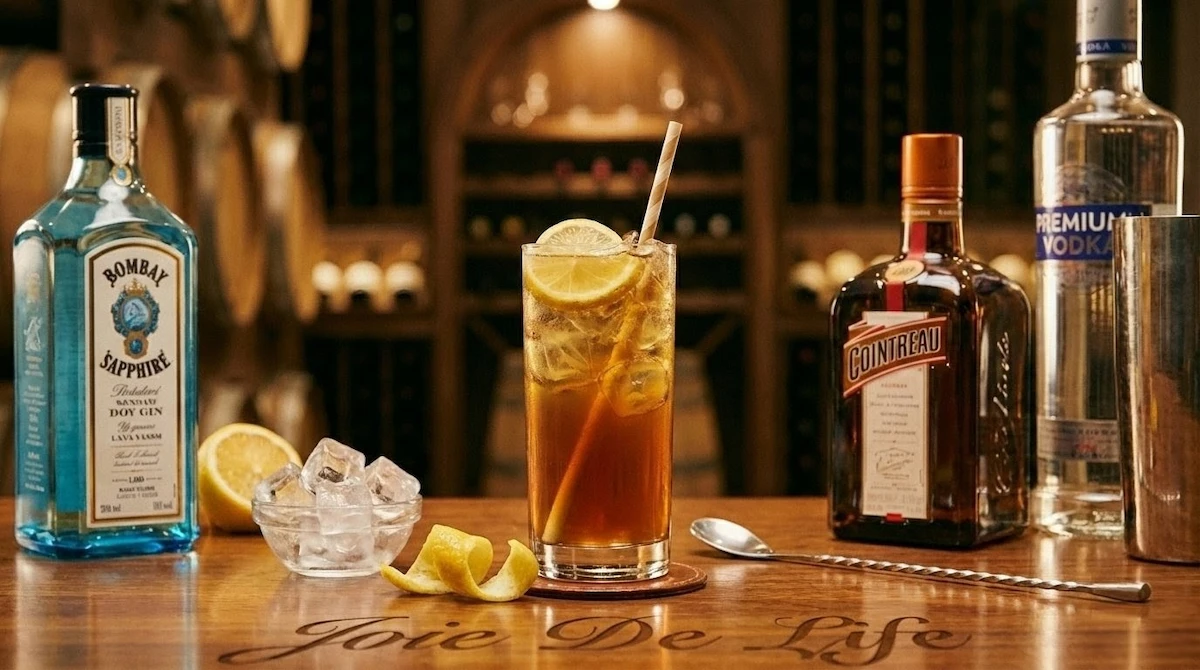
15 ml Gin: Don’t skip this. The botanicals add a necessary layer of complexity and depth. My favourite Bombay Sapphire
15 ml Cointreau: (Or another high-quality Triple Sec). This isn’t just sweetener; the orange oil notes bind the other spirits together.
25 ml Freshly Squeezed Lemon Juice: The game changer. Do not use bottled juice.
15 ml Simple Syrup: Essential to balance the tartness of the lemon.
A splash of Cola: Strictly for color. You only need a whisper on top to achieve that tea-like hue.
Garnish: A generous, fresh lemon wedge or even a orange one
A dash of Angostura Bitters: (My personal tip: This isn’t traditional, but it adds a savory, spicy depth that bridges the gap between the spirits and the cola beautifully.)
How to Make It (Shake It Up)
While many bars simply build this in the glass to save time, a truly elevated LIIT needs to be shaken. You need that aggressive chilling power and slight dilution to tame the potent mix of five spirits into a cohesive drink.
- Combine: Add all your spirits (vodka, rum, tequila, gin, Cointreau), the fresh lemon juice, simple syrup, and that secret dash of bitters into a cocktail shaker filled with lots of hearty ice cubes.
- The Shake: Seal the tins and shake vigorously for about 10–12 seconds. You want the outside of the tin to feel painfully cold and frosty. This ensures proper dilution.
- Strain: Strain the frosty mix into a tall Highball or Collins glass filled to the brim with fresh ice.
- The Top-Up: Finish with just a splash of cola on top. Watch as it cascades down, transforming the pale yellow liquid into that signature iced tea shade.
- Garnish: Adorn with a fresh lemon wedge on the rim.
The Verdict
Take a sip. It’s bright, refreshing, surprisingly complex, and dangerously smooth. It is a powerhouse, yes—but it’s also a reminder that even the most misunderstood things can surprise you when they are treated with a little respect and craftsmanship.
Just… a friendly word of advice: maybe stop at two. Trust me on this one.
Beyond the Classic
This classic recipe is just the foundation. The “five-spirit plus citrus” template is incredibly versatile. I will be sharing some exciting variants of this beautiful drink soon—think tropical vibes with pineapple, or one with a minty jamun and orange, different hues using other liqueurs—so keep an eye on this space.
Tell me in the comments: Are you ready to re-join Team LIIT, or do you still have college-night flashbacks just thinking about it? Try this elevated version and let me know if I’ve managed to convert you.
Leave a Reply